

NCERT | Santoor | What a tank Class 5 Question Answers Solutions is essential for young learners to build a strong foundation in the subject, and NCERT Class 5 English Chapter 6 Question Answer. Understanding the chapter thoroughly helps students grasp key concepts, improve comprehension, and perform well in exams.
In this article, NCERT Santoor What a Tank Class 5 English Question Answers Solved | Santoor | Chapter 6, we provide detailed Santoor | NCERT What a Tank Class 5 Worksheet Questions and Answers to make learning easier and more effective. Whether you are a student looking for well-explained solutions or a parent guiding your child, this guide will be a helpful resource for mastering the chapter with confidence. Also, we will include Santoor What a Tank Class 5 Worksheet pdf Solved Meaning in Hindi and What a Tank summary.
- What a Tank Class 5 Summary in English (What a Tank Class 5 Question Answer Solutions)
- What a Tank Class 5 Summary in Hindi (What a Tank Class 5 Question Answer Solutions)
- What a Tank Class 5 Summary in Bengali (What a Tank Class 5 Question Answer Solutions)
- Let us Think (What a Tank Class 5 Question Answer Solutions)
- Let us Learn (What a Tank Class 5 English Question Answers)
- A. Write the contractions for the following words.
- B. Rewrite the following underlined words using contracted forms.
- C. Read the following
- D. Find at least five exclamatory sentences from your Grade 4 English textbook and identify the emotions or feelings expressed in them.
- E. Look at the pictures of the animal families and read the words given below each of them.
- E. Look at the picture below. Would you like to add anything to this picture? Use your crayons and colour pencils to add to the picture.
- Let us Listen (What a Tank Class 5 English Question Answers)
- Let us Write (What a Tank Class 5 Question Answer Solutions)
- What a Tank Short Answer Type Questions (What a Tank Class 5 Question Answer Solutions)
- What a Tank Long Answer Type Questions (What a Tank Class 5 Question Answer Solutions)
NCERT What a Tank Class 5 Question Answer Solutions | Class 5 English | Santoor | Best Guide
What a Tank Class 5 Summary in English (What a Tank Class 5 Question Answer Solutions)
People have been saving water for many years. Long ago, big water storage systems were built to store water, protect cities from floods, and give drinking water. Even today, many places in India still use traditional methods. In Tamil Nadu, Ooranis store rainwater. In Kerala, Panam Keni wells never dry up. In Rajasthan, Tankas are used to store water for many months.
Nowadays, people keep water tanks on their roofs to store water. These are called overhead water tanks. In Punjab, these tanks look very unique. They are made in different shapes like flowers, footballs, roosters, statues, or aeroplanes. The shape of the tank often shows the owner’s job or interests. For example, a farmer may have a tank shaped like a tractor, and a football lover may have a football-shaped tank.
These tanks are made with steel rods and cement. They can store a lot of water. In rural Punjab, these creative water tanks are very special and bring pride to the community.
What a Tank Class 5 Summary in Hindi (What a Tank Class 5 Question Answer Solutions)
लोग कई सालों से पानी बचाते आ रहे हैं। बहुत पहले, पानी स्टोर करने, शहरों को बाढ़ से बचाने और पीने का पानी देने के लिए बड़े वॉटर स्टोरेज सिस्टम बनाए गए थे। आज भी, भारत में कई जगहों पर पारंपरिक तरीकों का इस्तेमाल होता है। तमिलनाडु में, ऊरानी बारिश का पानी स्टोर करते हैं। केरल में, पनम केनी कुएं कभी नहीं सूखते। राजस्थान में, कई महीनों तक पानी स्टोर करने के लिए टंका का इस्तेमाल किया जाता है।
आजकल, लोग पानी स्टोर करने के लिए अपनी छतों पर पानी की टंकियां रखते हैं। इन्हें ओवरहेड वॉटर टैंक कहा जाता है। पंजाब में, ये टंकियां बहुत अनोखी दिखती हैं। इन्हें फूल, फुटबॉल, मुर्गे, मूर्तियों या हवाई जहाज जैसे अलग-अलग आकार में बनाया जाता है। टैंक का आकार अक्सर मालिक की नौकरी या रुचियों को दिखाता है। उदाहरण के लिए, एक किसान के पास ट्रैक्टर के आकार का टैंक हो सकता है, और एक फुटबॉल प्रेमी के पास फुटबॉल के आकार का टैंक हो सकता है।
ये टैंक स्टील की छड़ों और सीमेंट से बने होते हैं। इनमें बहुत सारा पानी स्टोर किया जा सकता है। ग्रामीण पंजाब में, ये क्रिएटिव वॉटर टैंक बहुत खास हैं और समुदाय के लिए गर्व की बात हैं।
What a Tank Class 5 Summary in Bengali (What a Tank Class 5 Question Answer Solutions)
মানুষ বহু বছর ধরে পানি সংরক্ষণ করে আসছে। অনেক আগে থেকেই পানি সংরক্ষণ, শহরগুলিকে বন্যার হাত থেকে রক্ষা এবং পানীয় জল সরবরাহের জন্য বড় বড় জল সংরক্ষণ ব্যবস্থা তৈরি করা হয়েছিল। আজও, ভারতের অনেক জায়গায় এখনও ঐতিহ্যবাহী পদ্ধতি ব্যবহার করা হয়। তামিলনাড়ুতে, ওরানিরা বৃষ্টির জল সংরক্ষণ করে। কেরালায়, পানাম কেনি কূপগুলি কখনও শুকায় না। রাজস্থানে, বহু মাস ধরে পানি সংরক্ষণের জন্য ট্যাঙ্কা ব্যবহার করা হয়।
আজকাল, মানুষ পানি সংরক্ষণের জন্য তাদের ছাদে পানির ট্যাঙ্ক রাখে। এগুলোকে ওভারহেড ওয়াটার ট্যাঙ্ক বলা হয়। পাঞ্জাবে, এই ট্যাঙ্কগুলি দেখতে খুবই অনন্য। এগুলো ফুল, ফুটবল, মোরগ, মূর্তি বা বিমানের মতো বিভিন্ন আকারে তৈরি করা হয়। ট্যাঙ্কের আকৃতি প্রায়শই মালিকের কাজ বা আগ্রহের কথা বলে। উদাহরণস্বরূপ, একজন কৃষকের ট্র্যাক্টরের মতো আকৃতির ট্যাঙ্ক থাকতে পারে এবং একজন ফুটবল প্রেমীর ফুটবল আকৃতির ট্যাঙ্ক থাকতে পারে।
এই ট্যাঙ্কগুলি স্টিলের রড এবং সিমেন্ট দিয়ে তৈরি। এগুলি প্রচুর পানি সংরক্ষণ করতে পারে। গ্রামীণ পাঞ্জাবে, এই সৃজনশীল জল ট্যাঙ্কগুলি খুবই বিশেষ এবং সম্প্রদায়ের জন্য গর্ব বয়ে আনে।
Let us Think (What a Tank Class 5 Question Answer Solutions)
A. Answer the following questions.
1. What do we use a water tank for?
Answer: We use a water tank to store water for everyday use like drinking, cooking, bathing, and cleaning.
2. Where is Punjab located on the map of India?
Answer: Punjab is located in the northwestern part of India.
3. How are the water tanks in Punjab made?
Answer: The water tanks in Punjab are made using steel rods to form a frame. Then cement and concrete are used to give them their final shape.
4. How do the unique shapes of water tanks reflect the identity of the house owners?
Answer: The shapes show what the owner does or likes. For example, a farmer may have a tank shaped like a tractor or rooster, and a football lover may have a tank shaped like a football.
B. Think and answer
1. An overhead water tank is a way to store water. Do you know any other ways of storing water?
Answer: Yes, water can also be stored in wells, ponds, lakes, underground tanks, buckets, earthen pots, and large containers used at home. In some places, people also store rainwater in special storage systems.
2. If you had to build a water tank, what would you make it look like? Why?
Answer: I would make the water tank look like a book because books show learning and knowledge. It would also look unique and remind everyone about the importance of education.
Let us Learn (What a Tank Class 5 English Question Answers)
A. Write the contractions for the following words.

Answer:
- do not → don’t
- is not → isn’t
- are not → aren’t
- cannot → can’t
- could not → couldn’t
- did not → didn’t
B. Rewrite the following underlined words using contracted forms.
1. Partho is not feeling well today. His parents have decided that he will stay at home till
he gets better. Partho is bored and cannot stay at home anymore. He decides to ask
his grandmother if he can go outside, but he thinks she, too, would not agree.
Answer: Partho isn’t feeling well today. His parents have decided that he’ll stay at home till he gets better. Partho ’s bored and can’t stay at home anymore. He decides to ask his grandmother if he can go outside, but he thinks she, too, wouldn’t agree.
2. It is a rainy day, and Tina is not happy. She cannot go out to play with her friends. Her
brother does not want to play indoors either. They have decided to watch a movie instead.
Their mother says she will make popcorn for them.
Answer: It ’s a rainy day, and Tina isn’t happy. She can’t go out to play with her friends. Her brother doesn’t want to play indoors either. They’ve decided to watch a movie instead. Their mother says she’ll make popcorn for them.
C. Read the following
- That’s so creative!
- He saw a rooster, a tractor, and a giant football, all made of cement!
- Hurrah! India has won the match.
These sentences are examples of exclamatory sentences. Exclamatory sentences express strong emotions.
Can you name any four emotions?
Answer:
- Happiness
- Anger
- Surprise
- Fear
D. Find at least five exclamatory sentences from your Grade 4 English textbook and identify the emotions or feelings expressed in them.
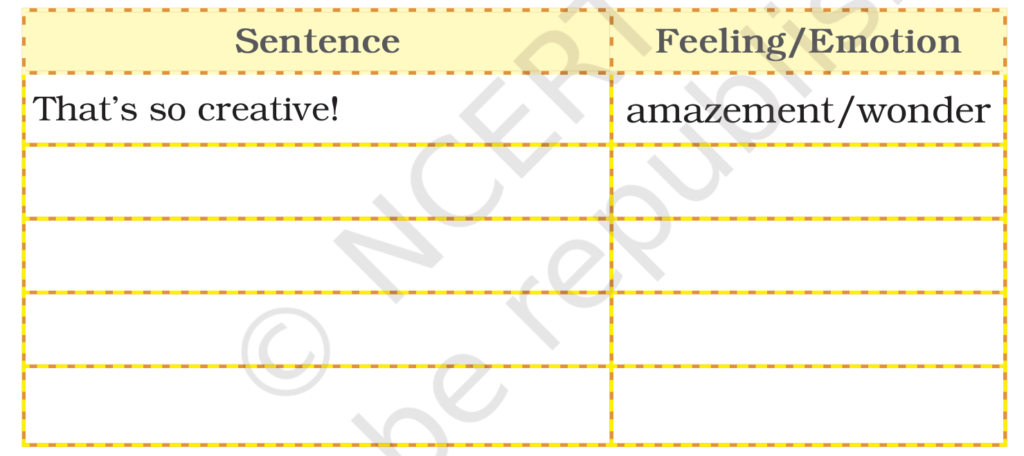
Answer:
| Sentence | Feeling/Emotion |
|---|---|
| That’s so creative! | amazement/wonder |
| What a beautiful day! | Happiness/joy |
| Oh no! I forgot my homework! | Worry/fear |
| Hurray! We won the game! | Excitement |
| What a big elephant! | Surprise |
E. Look at the pictures of the animal families and read the words given below each of them.
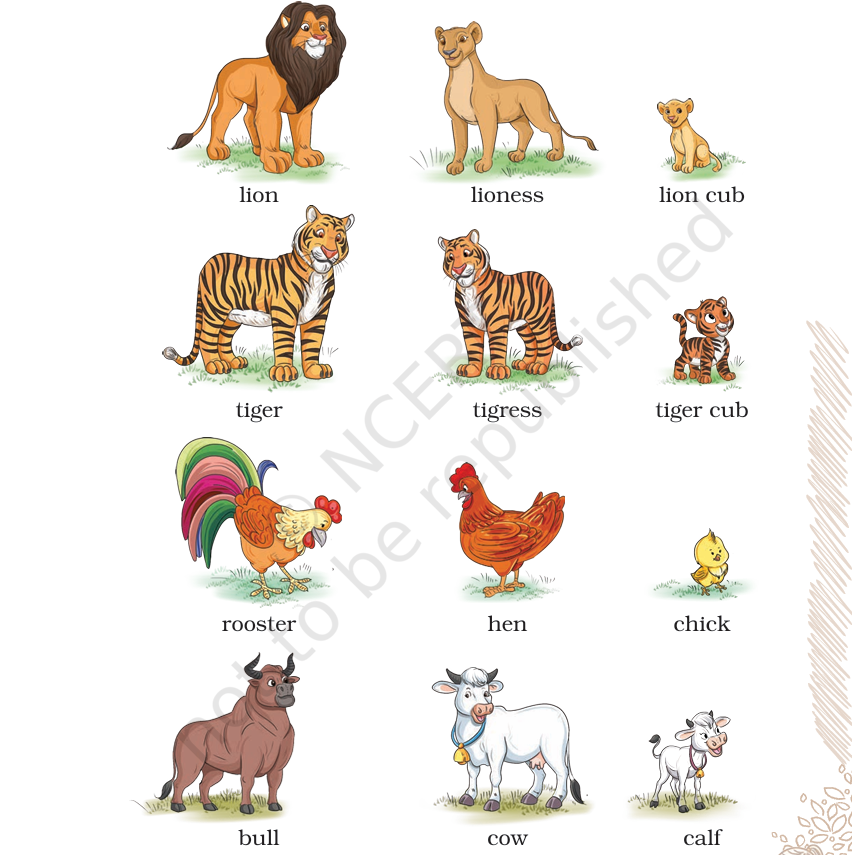
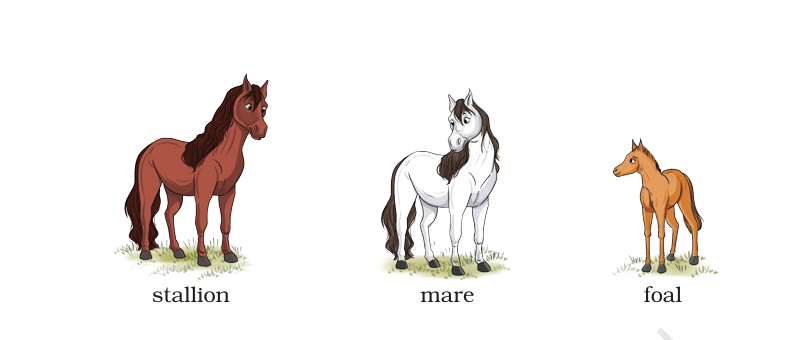
Answer: Read and understand carefully about the animal and their families.
E. Look at the picture below. Would you like to add anything to this picture? Use your crayons and colour pencils to add to the picture.
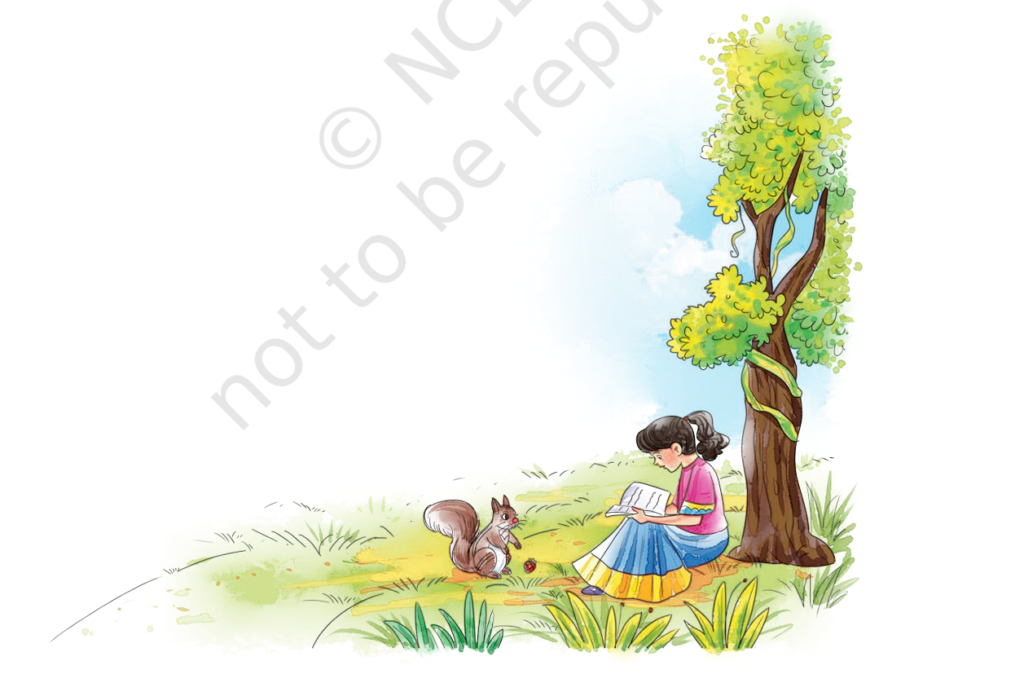
Answer: Do it by yourself.
Let us Listen (What a Tank Class 5 English Question Answers)
Listen to your teacher read out the following passage and choose the correct option.
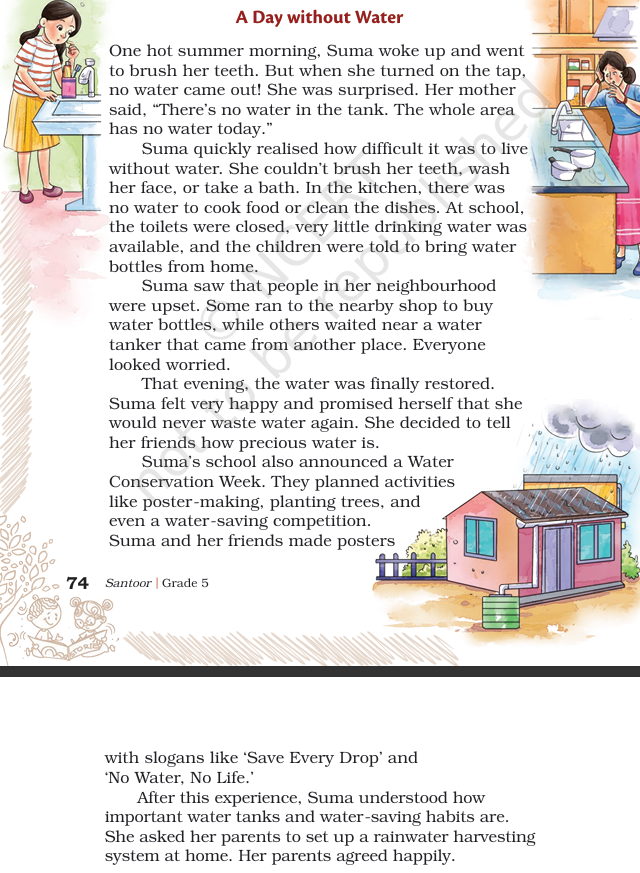
Choose the correct option:
1. Why was Suma surprised in the morning?
- Her friends came to visit.
- There was no water in the tap.
- She saw a rainbow.
- She had a holiday.
Answer: b. There was no water in the tap.
2. How did people manage without water?
- They didn’t need water.
- They bought bottles and waited for tankers.
- They drank juice instead.
- They went swimming.
Answer: b. They bought bottles and waited for tankers.
3. What did Suma promise after the water supply was restored?
- To waste more water.
- To never waste water again.
- To turn off the tap.
- To check the water tank frequently.
Answer: b. To never waste water again.
4. What activities were planned during the Water Conservation Week?
- Making taps.
- Poster-making and planting trees.
- Tank making.
- Watching flowing water.
Answer: b. Poster-making and planting trees.
5. What did Suma suggest to her parents?
- To go near a well.
- To build a swimming pool.
- To fix a rainwater harvesting system.
- To buy a new tank.
Answer: c. To fix a rainwater harvesting system.
Let us Write (What a Tank Class 5 Question Answer Solutions)
A. Design a poster in the space below, encouraging people to preserve and clean old water tanks.
Include:
Topic:‘Save Our Water Tanks – A community awarness Campaign’- A catchy slogan (e.g., ‘Save Tanks, Save Lives!’).
- A few bullet points on why tanks are important.
- An invitation to join a cleaning drive or awareness programme (mention the place and time of the cleaning drive).
Answer: Do it by yourself.
B. Write 10 words that end with ‘er’.
For example: water
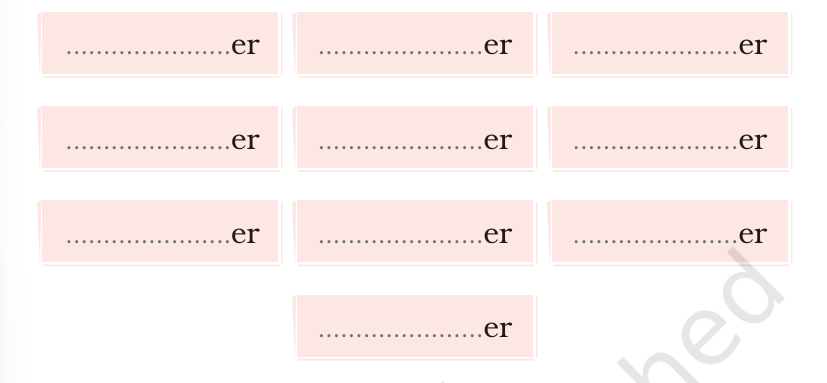
Answer:
- Teacher
- Farmer
- Driver
- Player
- Singer
- Dancer
- Baker
- Painter
- Writer
- Cleaner
NCERT What a Tank Class 5 Extra Question Answers Solutions | Class 5 English | Santoor | Best Guide
What a Tank Short Answer Type Questions (What a Tank Class 5 Question Answer Solutions)
1. Why couldn’t Suma brush her teeth in the morning?
Answer: Because there was no water in the tap.
2. Who told Suma that there was no water in the tank?
Answer: Her mother told her.
3. What problems did Suma face at home without water?
Answer: She could not wash her face, bathe, cook, or clean dishes.
4. What happened to the toilets at school?
Answer: The toilets were closed.
5. What were the children told to bring to school?
Answer: They were told to bring water bottles from home.
6. Where did some people go to get water?
Answer: They went to nearby shops to buy water bottles.
7. What did others wait for to get water?
Answer: They waited for a water tanker.
8. How did Suma feel when the water was restored?
Answer: She felt very happy.
9. What promise did Suma make to herself?
Answer: She promised to never waste water again.
10. What slogan was written on Suma’s poster?
Answer: “Save Every Drop” and “No Water, No Life”.
What a Tank Long Answer Type Questions (What a Tank Class 5 Question Answer Solutions)
1. Describe the problems Suma and others faced due to the water shortage.
Answer: Suma faced many problems because there was no water in her area. She could not brush her teeth, wash her face, or take a bath. In the kitchen, there was no water to cook food or wash the dishes. At school, the toilets were closed and very little drinking water was available. The children were told to bring water from home. People in the neighbourhood were worried. Some bought water bottles and others waited for a water tanker. Everyone was troubled due to the shortage of water.
2. What did Suma learn from this experience?
Answer: Suma learned that water is very precious and important for our daily life. When there was no water, she understood how difficult life becomes without it. After the water supply was restored, she promised herself that she would never waste water again. She also decided to tell her friends about the importance of saving water. This experience made her more responsible.
3. What steps were taken by Suma and her school to save water?
Answer: Suma’s school announced a Water Conservation Week. Many activities were planned like poster-making, planting trees, and a water-saving competition. Suma and her friends made beautiful posters with messages like “Save Every Drop” and “No Water, No Life”. Suma also asked her parents to set up a rainwater harvesting system at home, and they happily agreed.
Hi, after reading this remarkable post i am
too happy to share my knowledge here with friends.